






European CommissionErasmus+ANPCDEFP
Organised byEuropean CommissionErasmus+ANPCDEFP
European Day of Languages at The Youth

LinguaFest 2026

European Day of Languages

Celebrating the European Day of Languages, LinguaFest brings together young people, teachers, students, and professionals to celebrate the diversity of Europe's languages and cultures. Take part and discover new perspectives, and new connections!

Organised by the Representation of the European Commission in Romania (DG Translation) and by ANPCDEFP — the Erasmus+ National Agency, with the participation of EUNIC Romania and the cultural institutes. Hosted by the National Youth Foundation, at The Youth.

Friday, 25 September 202609:30 – 16:30Free entry to the standsWorkshops require sign-up
OrganisersEuropean CommissionANPCDEFP
With the participation ofEuropean ParliamentEUNIC RomaniaFundația CODA – Farmecul TăceriiAsociația ROMA T.E.A.M

Programme

What's happening on 25 September?

Plenary sessions, interactive workshops, and activities focused on foreign languages and European learning opportunities. You'll discover new languages and cultures, learn new ways to communicate, and meet people who are passionate about Europe's linguistic and cultural diversity. The event will take place at The Youth, 22 Christian Tell Street, Bucharest.

09:00

Arrival & registration

Pick up your badge and access wristband.

Foyer
09:30

Roundtable: “The importance of language learning”

Agora · sign-up
11:00

The stands open

The courtyard and stands are open to everyone, no sign-up: the European Commission Representation (DG Translation) & the European Parliament Liaison Office, ANPCDEFP & Eurodesk, FNT, the EUNIC cultural institutes, a Roma cultural NGO. Mini-quizzes and language challenges with prizes.

Courtyard · open
11:30

Volunteering workshop & world café

Hosted by FNT: rotating tables on volunteering, languages and life in a new country.

Agora · sign-up
13:00

Stands & fair

EUNIC Treasure Hunt, workshop presentations and on-site workshop sign-up.

Courtyard · open
14:00

Guided tour of The Youth

Groups of 15–20. Tick the tour in the sign-up form.

Sign-up
14:30

Language workshops · session I

Parallel workshops, 10–20 participants each.

On-site sign-up
15:30

Language workshops · session II

The second workshop — each participant picks two in total.

On-site sign-up
16:30

Closing plenary

Five minutes per workshop: what participants discovered. Thanks and an invitation to future editions. The exact place is announced on the day, depending on the weather.

Courtyard or Agora

Stands

The stands in the courtyard

Open to everyone from 11:00, no sign-up needed. Every stand has mini language challenges and prizes.

1

European Commission & European Parliament

EC Representation (DG Translation) · EP Liaison Office

Discover multilingualism in action at the European Commission and the European Parliament! Find out more about the 24 official languages of the European Union and how they are used in EU institutions, and explore how young people can get involved through initiatives and multilingual events such as the European Youth Event (EYE).

2

Erasmus+ and Eurodesk

ANPCDEFP · Eurodesk Romania

What learning and mobility opportunities are available to you through the Erasmus+ and European Solidarity Corps programs? From scholarships and internships to youth exchanges, volunteer projects, and solidarity projects with a local impact - the Erasmus+ and ESC National Agency, together with Eurodesk, will answer all your questions!

3

Opportunities for young people

Tinerii Capitalei · National Youth Foundation (FNT)

Tinerii Capitalei runs right here, at The Youth. Are you 14 to 29 and from Bucharest or Ilfov? The programmes, counselling, career guidance, themed clubs and volunteering are free — at the centre or through the mobile teams that reach the city's neighbourhoods and the communities in Ilfov. At the stand we show you how to sign up, and what else you can do through FNT: spaces for your own project, events, and Erasmus+ and European Solidarity Corps mobilities.

tinerii.capitalei.ro
4

Cultural institutes · Treasure Hunt

EUNIC Romania

Not one stand but a row of seven: the European cultural institutes in Bucharest, side by side. This is where the EUNIC Treasure Hunt starts — visit each institute, solve its challenge in its language and collect stamps.

  • Italian Cultural Institute
  • Czech Centre Bucharest
  • Goethe-Institut Bucharest
  • Liszt Institute / Hungarian Cultural Centre Bucharest
  • British Council Romania
  • Romanian Cultural Institute
  • Yunus Emre Institute Bucharest
description coming soon
5

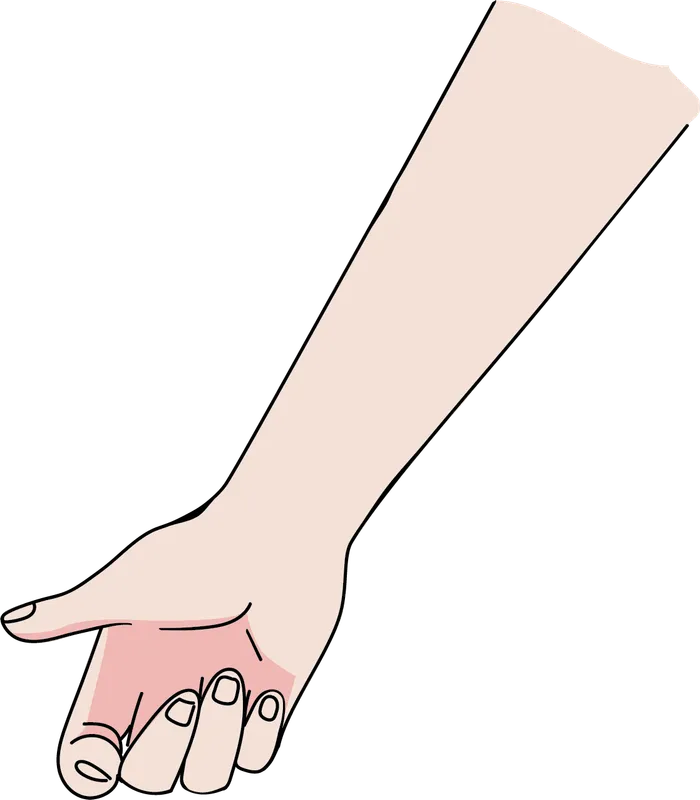
Romani language and Roma culture

Asociația ROMA TEAM

The stand description is coming soon.

description coming soon

Map of the courtyard

The courtyard, as we propose itSketch of The Youth courtyard: on the west side the ground-floor rooms (the way, the action, info point, 3rd space) and the two stairways, on the north side the snack spot, ANOSR and the agora, to the east the Goethe kindergarten, at the bottom the FNT offices and the parking, the stage in the middle, and the entrance at the bottom right. Stands 1–6 are marked over the sketch: 1 and 2 by the entrance, first on the visitors' route, 3 and 5 in the middle of the courtyard, 6 on the route in from the entrance, and the seven EUNIC institutes (4a–4g) on a semicircle opening towards the entrance.1. European Commission & European Parliament — EC Representation (DG Translation) · EP Liaison Office12. Erasmus+ and Eurodesk — ANPCDEFP · Eurodesk Romania23. Opportunities for young people — Tinerii Capitalei · National Youth Foundation (FNT)34. Cultural institutes · Treasure Hunt — EUNIC Romania4a. Italian Cultural Institute4a4b. Czech Centre Bucharest4b4c. Goethe-Institut Bucharest4c4d. Liszt Institute / Hungarian Cultural Centre Bucharest4d4e. British Council Romania4e4f. Romanian Cultural Institute4f4g. Yunus Emre Institute Bucharest4g5. Romani language and Roma culture — Asociația ROMA TEAM5
Proposed layout — to be confirmed on site on 23 SeptemberSketch of The Youth courtyard, 22 General Christian Tell St.

Workshops

Language workshops

Run by speakers and translators, not textbooks. No level required.

2workshops per person, chosen on site after lunch

14:3015:30session I and session II, 60 minutes each

10–20participants in each workshop, in order of arrival

  1. ZH

    The story of Chinese characters

    The workshop invites participants to discover the mystery and the beauty of Chinese characters, the oldest writing system still in use today.

    Read the description

    You will find out what lies behind the characters used now, how they originate in ancient pictograms and how they evolved over the centuries — along with the writing tools and surfaces people used. Behind the characters lies a rich cultural tradition thousands of years old, and this is an invitation to start discovering it.

    Elena Racu, Erasmus+ mobility projects expert

  2. THEATRE

    Theatre in your own language

    Theatre is a universal channel of communication, carrying emotion and meaning across cultural barriers — but its real magic appears once you accept that it can also be a personal learning tool.

    Read the description

    A few words, a short text and two gestures can convey intentions from the most serious to the most comic, making vocabulary and grammar far easier to absorb. The rhythm of the lines, the intonation and the nuance of each word are picked up naturally, through interaction and genuine experience. In a character's clothes, the learner gradually overcomes the fear of making mistakes and grows more spontaneous. Any space to play — a room, a classroom, even a lift — can host experiments and acts of communication, turning a simple tongue twister into a living form of connection and free expression.

    Ileana Racoviceanu, GONG Theatre, Sibiu

  3. IT/TR

    Cinema taught us to speak standard Italian / Discover Turkish: A Sample Language Course

    Two workshops in the same room, an hour each — Italian first, then Turkish; you choose on the spot which one you stay for.

    Read the description

    “Cinema taught us to speak standard Italian”: before they learned to speak the same language, Italians had to learn to know one another. Cinema played a fundamental part in that process: it brought to the screen dialects, accents, regional expressions, gestures and profoundly different worlds, turning linguistic and cultural diversity into common ground. From Totò and Peppino to Sordi and Monicelli, Italian comedy told — and often poked fun at — the differences between North and South, between towns and villages, between old traditions and new habits. Through cinema, Italians began to recognise one another and, precisely through their differences, to build a shared sense of belonging. An audiovisual journey into the Italian language and identity, to rediscover that our differences are not an obstacle to overcome but a richness that allowed us to meet. “Discover Turkish: A Sample Language Course”: this interactive workshop offers participants a first introduction to the Turkish language through simple and practical activities. Participants will learn basic greetings, common expressions, numbers, and useful everyday phrases while also discovering some interesting aspects of Turkish culture. The workshop is designed for beginners with no previous knowledge of Turkish and aims to create an enjoyable and engaging first contact with the language. Through short dialogues, pronunciation exercises, and interactive activities, participants will have the opportunity to experience how Turkish sounds and how it is used in everyday communication.

    Gabriele Alfieri (Italian Cultural Institute) and Atina Abiltar (Yunus Emre Institute)

  4. EN

    Speak and act! English for emergencies

    An interactive workshop for anyone who wants to learn how to communicate simply and effectively in English in unexpected situations.

    Read the description

    Through games, quick challenges and simulations inspired by real situations, participants discover useful phrases for asking for help, describing what happened and passing on essential information. Suitable for pupils, students and teachers, whatever their familiarity with medical vocabulary. In an emergency, the most important words are the ones you can say quickly, clearly and with confidence.

    Iuliana Raluca Gheorghe, learning ambassador, associate professor at Carol Davila University of Medicine and Pharmacy, Bucharest

  5. FR

    Slow Fashion sur le podium – when French meets sustainable fashion

    An interactive experience of using French through a current, interdisciplinary theme: sustainable fashion.

    Read the description

    Starting from the question “Peut-on être à la mode et responsable ?”, participants discover and use fashion and sustainability vocabulary and explore fast fashion, slow fashion, mode durable, consommation responsable, recyclage and upcycling.

    Oana-Roxana Costache, learning ambassador, teacher at I. G. Duca Secondary School, Bucharest

  6. RSL

    Romanian Sign Language

    A first contact with Romanian Sign Language, starting from what every conversation starts with: introducing yourself.

    Read the description

    You learn the greetings first, then the signs you need to say who you are and to ask in return — your name, where you come from, whether you are married and have children, what you do (school, kindergarten, university, work), how old you are and what you like doing. It runs for one hour, in a small group of 10 to 15 people.

    Andrei Darie, Fundația CODA – Farmecul Tăcerii

  7. EN/DE

    To speak or not to speak / Your First Steps into the German Language

    Two workshops in the same room, one after the other, an hour each — you choose on the spot which one you stay for.

    Read the description

    “To speak or not to speak”: participants explore English in a fun and creative way through short scenes, famous quotes, word games, and simple drama activities inspired by Shakespeare’s works. The event encourages participants to speak, perform, collaborate, and discover how Shakespeare’s language and expressions continue to influence English today. “Your First Steps into the German Language”: this interactive workshop offers participants a fun and engaging introduction to the German language. Through games, practical communication activities, and cultural insights, participants will learn basic greetings, simple self-introductions, and interesting facts about German-speaking countries. No prior knowledge of German is required.

    Irina Neicu (British Council) and Marie-Isabell Bichi (Goethe-Institut)

Sign-up

We will hold your place

Fill in once. You receive a confirmation by email.

Free participation · young people, pupils, students and teachersPlaces at the roundtable, world café and tour are limitedWorkshops are chosen on site, after lunchUnder 18 you need a parent's consent
Coming with a class or a group? Use the Teachers & classes tab, or write to linguafest@rotineret.ro.

Registration is closed — all places are taken

The roundtable, world café and workshops are full. The stands in the courtyard stay open to everyone, free entry, no sign-up needed: just come along between 11:00 and 14:30 for the stands, games and everything happening in the courtyard.

About EDL

Since 2001, Europe celebrates languages on 26 September

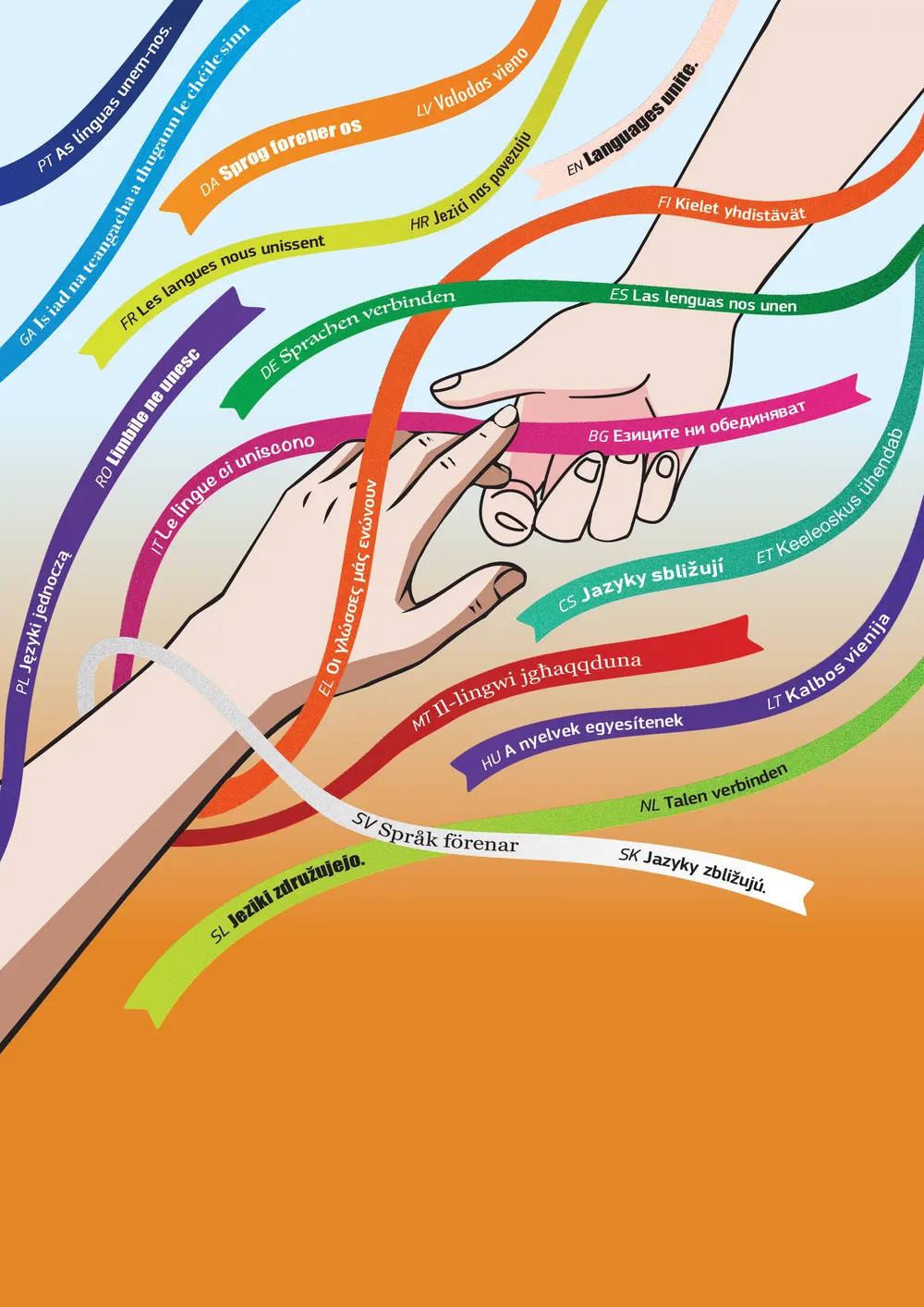
The European Day of Languages is an initiative of the Council of Europe and the European Commission: over 800 million Europeans are encouraged to learn more languages, at any age. This year's campaign message is simple — languages unite.

LinguaFest 2026 marks the day on Friday 25 September at The Youth, together with ANPCDEFP, the European Commission and cultural partners: workshops run by speakers and translators, not textbooks, and a space where you can make mistakes in any language.

24

official EU languages

200+

languages spoken in Europe

7

language workshops at The Youth

Practical info

Where and how to get there

VenueFundația Națională pentru Tineret
Str. Christian Tell 22, București
DateFriday, 25 September 2026, 09:30–16:30
AccessFree entry to the stands; the roundtable, world café, building tour and workshops require sign-up
Scan for the official European Day of Languages campaign materials.

Scan for the official European Day of Languages campaign materials.

Do I need to know the language to join a workshop?

No. All workshops are introductory and interactive; if you already know the language, the facilitator gives you more advanced tasks.

How many workshops can I pick?

Two, on site, after lunch: one at 14:30 and one at 15:30. Places are taken in order of arrival.

Does it cost anything?

No. Participation and materials are free.

Can I come with my class or group?

Yes. Use the “Teachers & classes” tab — we reserve places for the whole group.

I need special accommodations

Tick the box in the form and we contact you, or write to linguafest@rotineret.ro.

What happens to my data?

We use it only to organise the event and delete it 30 days after the event. Details in the privacy policy.

The venue

Agora, at The Youth

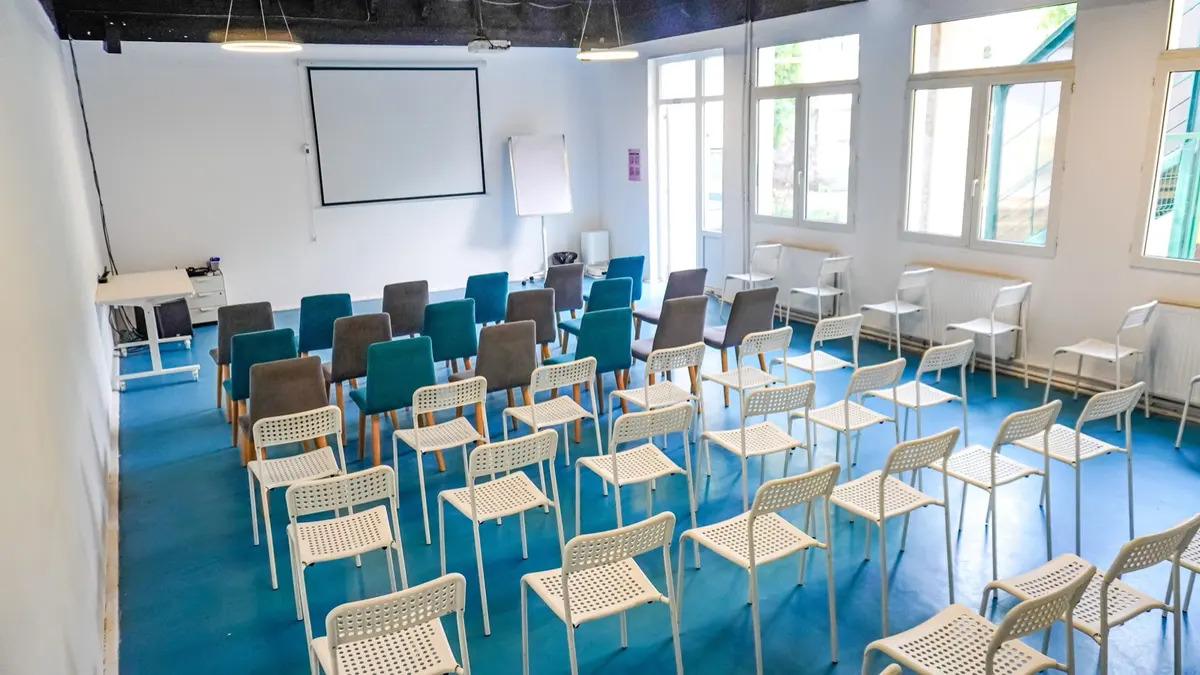
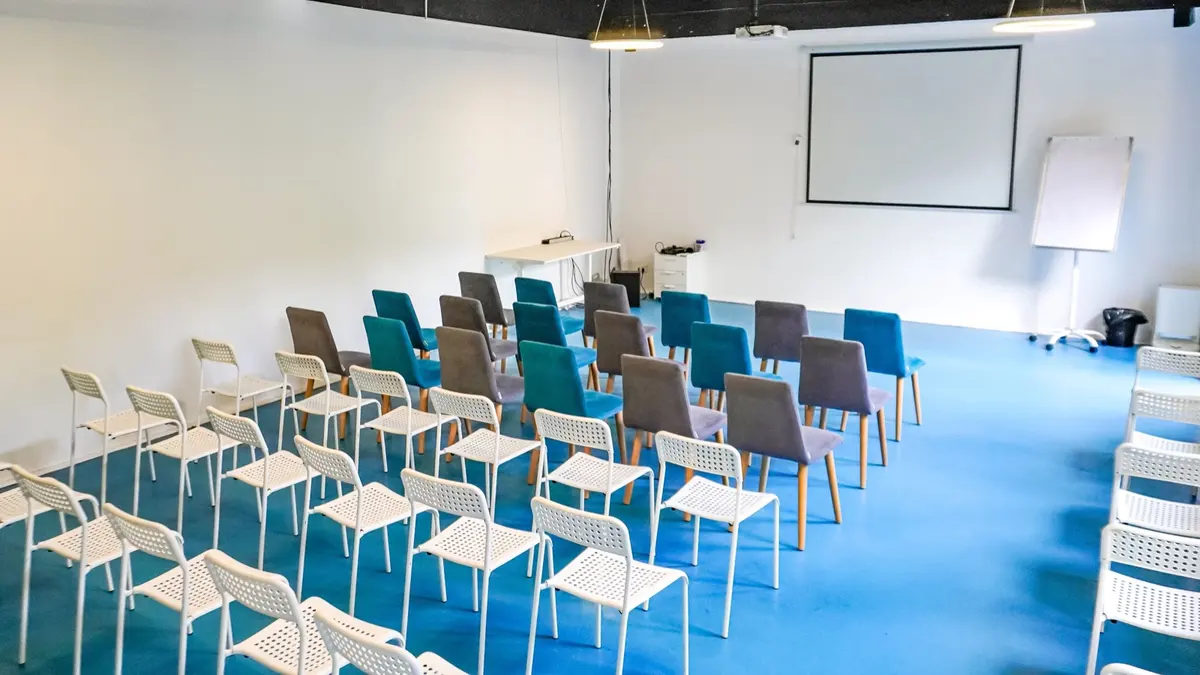
The roundtable and the world café take place in Agora — The Youth's main hall: 70 seats, projection screen, sound system. The stands and the fair are in the courtyard, the workshops in the training rooms upstairs, and the closing either in the courtyard or in Agora, depending on the weather.

Agora — The Youth's main hall, with chairs and a projection screenAgora, seen from the entrance

See the space on The Youth ↗